A history of Stained Glass and its prevalence today

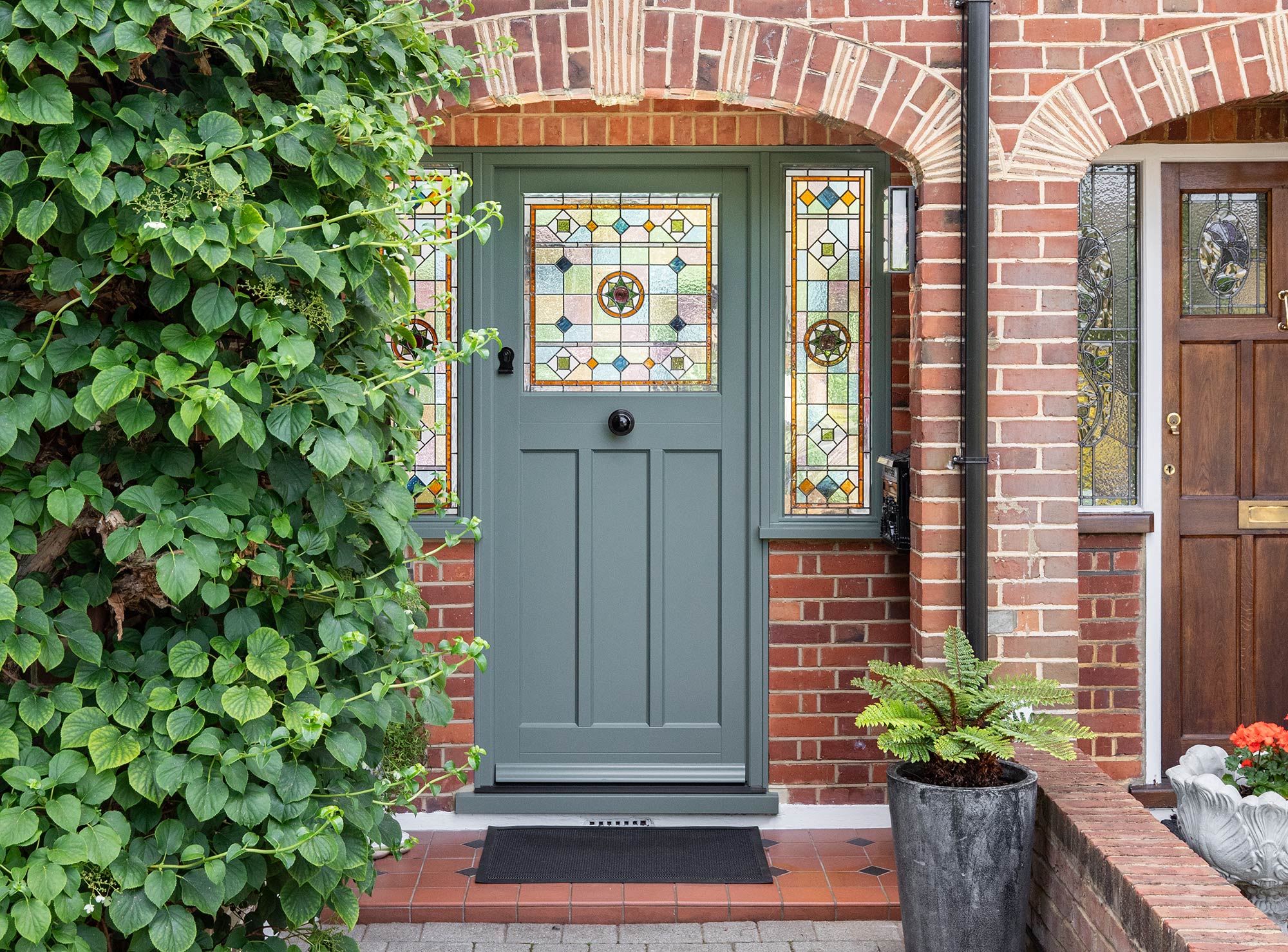
Stained glass is a historic, storytelling medium and art form that was first discovered and recovered from the ruins of ancient civilisations. It has evolved over the centuries and eras since to become a key feature in multiple windows and doors in homes and historic buildings all across the country and wider world today. When you think of stained glass, you may automatically think of churches and cathedrals, and rightly so. However, it has evolved far beyond places of worship, and can transform an entire building with its beauty and unrivalled charm.
In more recent years, stained glass has seen a resurgence in popularity among homeowners, when looking to add character and beauty in their homes, or retain it where the original stained glass still features where possible.
Today we will explore stained glass further, delving into its origins and use over the centuries in the UK, and how this history has shaped what is now available for all homeowners regardless of the age and architecture of their property.
A brief history of stained glass
The first pieces of stained glass discovered by archaeologists date back as far as 2750 BC, crafted during the Ancient Egyptian civilisation. Recovered pieces are believed to have been pieces of vases and decorative cups used by the richest of that time.
In the UK, earliest records of stained glass come from the 7th century, where Benedict Biscop commissioned workmen to create stained glass designs for the St Peter’s Monastery in Sunderland. Stained glass became especially prevalent and more widely adopted during mediaeval times, as more churches and abbeys were constructed nationwide. Designs featured stories from the bible and displayed the lives of saints, working as a powerful, visual learning method, to a mostly illiterate audience at the time. Through design and vibrant colours that came to life in natural light, stained glass was a powerful religious tool that has stood the test of time to this day.
The construction of so many churches across the whole of Europe, including the UK, with their distinctive, prominent stone arches, pillars and large glass windows became known as the Romanesque and Gothic periods over the many centuries.
In the 15th century, the classical movement took shape, where the techniques used to produce stained glass evolved. Paler colours were incorporated into designs, and less lead joints were used overall (which was seen as an obstruction to the art), creating more seamless, singular pieces of artwork that were seen as more sophisticated. Stained glass was adopted in more public buildings and homes in the centuries following this. Sadly, this came at the expense of many of the original, mediaeval pieces of stained glass that were crafted prior to this movement, which were destroyed and replaced.
Further original pieces were destroyed during the reign of King Henry VIII, whose desire for an annulment from his marriage to Catherine of Aragon led to his split from the Catholic church and appointment as the head of the Church of England. Sadly, this split caused conflict across the country, where numerous original pieces of stained glass depicting religious stories were destroyed. By the beginning of the 19th century, stained glass had declined further, with more of it having been destroyed yet not replaced, with it then being seeing as a ‘dead form of art’.
The Victorian Era and Arts & Crafts movement in the UK
Thankfully, to the benefit of the UK and its architecture, during the mid 1800s, stained glass made a lasting comeback. Advancements in technology and production progressed styles and shapes of windows and doors (which we cover more here), and mass production became more possible and widely adopted. This led to an increase in the number of stained glass pieces being specified in buildings of all sorts across the country.
This however, created conflict with some artists, who opposed this mass production, uniform method of craftsmanship, arguing that key skills and individuality were being lost. They explored our past to find inspiration, rediscovering the art of original stained glass from the mediaeval era that had been lost over the centuries. Notable figures such as William Morris created intricate, distinctive stained-glass designs, which were then installed in the doors and windows of people’s homes. It was also around this time that Louis Comfort Tiffany’s innovative methods and craft led to what is known as opalescent glass, which he combined with the ‘copper foil method’ to create beautiful lamps, decorative ornaments and windows. Tiffany glass is to this day highly sought after and featured in beautiful buildings worldwide.
Stained Glass in today’s homes
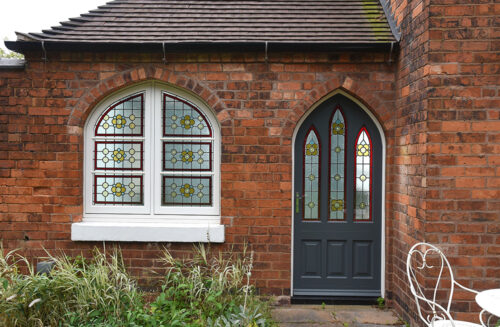
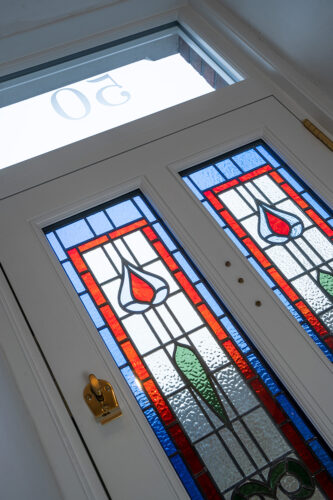
In the years and decades that have proceeded the Arts and Crafts movement in the UK, stained glass has only increased in popularity. Modern manufacturing is more advanced than ever, and historical records are now available at a simple click of a button, allowing manufacturers to craft exquisite glass designs inspired by any era, or personal taste. Stained glass has become increasingly installed in homes across the country, and is especially popular in Victorian and Edwardian style front doors, which elevate the overall design and created stunning entrances to homes, bursting with character and elegance.
With the tools and design capabilities at our disposal today, we are living in a golden age of stained glass, where designs from all eras can be faithfully recreated to provide the most authentic look for the homes and buildings they are installed in. This is especially prevalent in cities, notably London, which still has numerous, original Victorian and Edwardian streets and buildings. Taking a walk down any of these roads in London, you will see numerous examples of outstanding, original stained glass from that era, painting a picture of what life was like back then. Where the original stained glass could not be retained, homeowners have faithfully recreated it to ensure the original look is not lost to time.
Encapsulation of replication
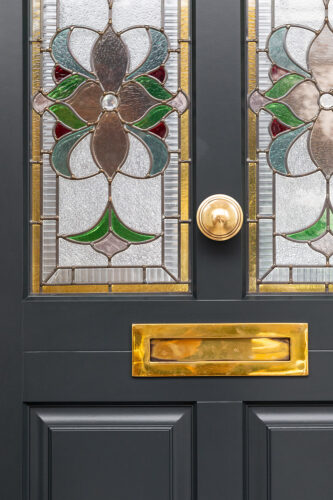
In some cases, it is possible to retain the original stained glass from a window or door, and encapsulate it within a new, double-glazed unit. This preserves the original look, and protects these beautiful pieces of original glass. This may not always be possible, however. If the stained glass is too brittle, or has been damaged over the years (as many stained glass windows were single glazed and had no protection), then replication may be recommended. With modern manufacturing capabilities, it is possible to recreate these original looks, matching the colours, joints, and patterns seamlessly.
How stained glass is crafted by Timber Windows
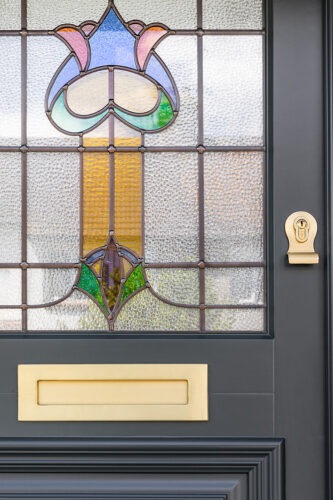
With the Timber Windows range, we offer a bespoke stained glass service across our entire range, which allows you to either faithfully recreate an original design, or create a beautiful new piece of artwork from scratch. Designs are limited only by your imagination, and we have been lucky to visit numerous customers over the years who have transformed their home with stunning stained glass windows and doors. Vivid colours, textured glass and traditional lead joints combine to create characterful pieces of artwork that elevate the kerb appeal and beauty of your home.
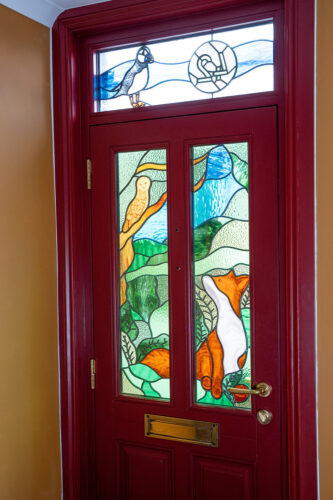
Our bespoke service has seen some truly wonderful creations, including our customer in Essex who comments “We wanted to tailor our door and glass design to reflect our love of animals”. A stained glass owl, fox, and even a puffin now feature on her door; a truly one-of-a-kind front door you wouldn’t find anywhere else. You can read her story here.
Another customer was inspired by London’s architectural history, using pieces of various designs to create their own, which has been so transformative, we have seen more designs akin to this in other installations country wide since. When we visited to take some professional photos, they explained “I took inspiration from glass designs all over London, and had been collating them. I then planned long and hard on designing my own glass in conjunction with Timber Windows.” London is often a key point of inspiration for homeowners due to its uniqueness as a major city. Architecture from all periods, including modern day skyscrapers are all mixed together and historical buildings are protected with Listed statuses. Every street tells a different story and a walk across the city can teach you so much about our nation’s history. You can read our customer’s story here.
Very recently, we visited a lovely customer in Essex, who wanted to use stained glass as a way of showing her love to her daughters, and incorporated a stained glass poppy and rose into her new front door; aptly chosen after the names of her children. Offering this bespoke, personal service, is something we are very proud of; helping homeowners really showcase their personality, loves and passions, through the medium of our timber windows and doors. From floral designs, to art deco inspired pieces, colourful geometric patterns and stained glass animals, we can help create a truly wonderful piece for you and your home.
Stained glass has historically been, and still is, a key feature in churches nationwide, and is a vibrant and effective storytelling method. However, over the years, its influence and adoption has only increased and can now be found on homes of all ages across the country. It has the ability to completely transform a home, pay homage to its history, and create a lasting legacy that will last for years to come. Please explore our case studies, where we have captured some of these beautiful pieces, and visit your local showroom to learn more about our offerings, and see more beautiful examples first hand. You can also see further examples of our glass offerings here.